UPSC Civil Services Examination 2026: Complete Schedule, Eligibility, Exam Pattern and Preparation Strategy
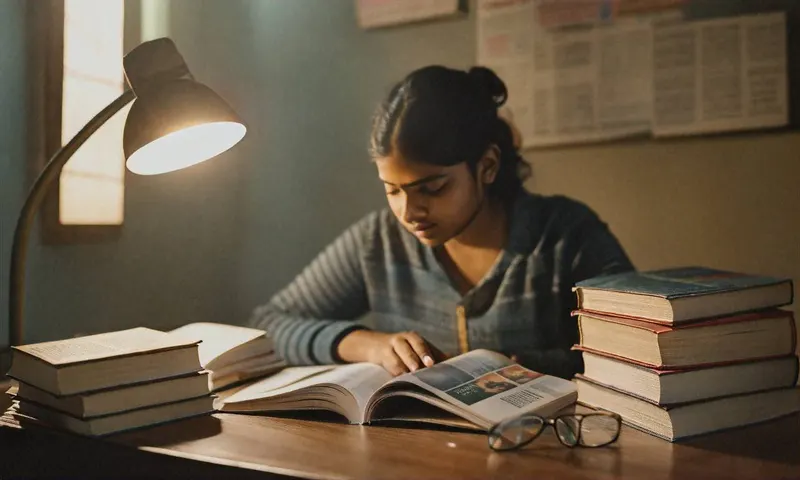
So the notification is out. UPSC Civil Services 2026. Prelims on 24 May, application deadline 4 March, roughly 1,000 to 1,100 seats up for grabs across IAS, IPS, IFS, and 21 other services. I've been covering this exam for over a decade now, and every February when this notification drops, my phone starts buzzing with the same question from students, parents, distant relatives: "Sir, is it worth it?"
Honest answer? I don't know. It depends on you. But let me try to give you something more useful than the usual notification copy-paste that every website is running right now.
I remember sitting in a Mukherjee Nagar tea stall in 2016 with a kid named Ravi -- from Deoria, UP, father was a primary school teacher, mother stitched clothes. He'd come to Delhi with 40,000 rupees and a second-hand Laxmikanth. Four years later, he was an IPS officer. I also remember Sneha, a girl from Pune with an engineering degree from COEP and two years at TCS under her belt. She quit her job in 2018, gave four attempts, missed Mains twice by a few marks, and eventually went back to IT in 2022. Both stories are real. Both are common. This exam does that to people -- it makes and breaks them in roughly equal measure, and nobody tells you which side you'll land on until you're deep in it.
The Numbers That Should Scare You (And Then Motivate You)
Dekho, let me be straight about the scale of this thing.
Last year, 11.4 lakh people registered. About 5.8 lakh actually showed up for Prelims (the rest either chickened out, didn't prepare enough, or -- and this is more common than people admit -- just filled the form "because papa said so"). From those 5.8 lakh, around 14,200 made it to Mains. Then about 2,800 got interview calls. Final selection? 1,056 people.
That's a 0.09% selection rate if you count everyone who appeared. Not registered -- appeared. Matlab, out of every thousand people sitting in that exam hall, less than two will become officers. Let that sink in.
| Stage | Numbers (2025 cycle) | What it feels like |
|---|---|---|
| Registered | ~11.4 lakh | Everyone and their cousin |
| Appeared for Prelims | ~5.8 lakh | Half the crowd vanishes |
| Cleared Prelims | ~14,200 | 97.5% gone in one afternoon |
| Called for Interview | ~2,800 | You start recognizing faces |
| Final selection | 1,056 | You cry. Your mom cries. Everyone cries. |
2026 will probably see 12 lakh registrations. The DoPT has been saying for a year that IAS cadre is short by nearly 1,500 officers, so vacancies might edge up slightly. But don't bank on that -- even a hundred extra seats barely changes the math when lakhs are competing.
What Do These Officers Actually Do? (Not What You Think)
Most aspirants I meet have a filmy image of the IAS. White Ambassador (okay, now it's a Scorpio or Fortuner), red beacon, signing files, "power." Let me tell you what it actually looks like.
A 2019-batch IAS officer I know -- won't name her, she'd kill me -- spent her first posting as SDM in rural Madhya Pradesh. Her typical day: wake up at 5:30, reach office by 8, deal with land dispute hearings until noon, drive 60 km on broken roads to inspect a PM Awas Yojana site, get yelled at by the MLA's PA because the road in his constituency has a pothole, come back to write a report for the DC, attend a meeting about flood preparedness, and finally get home at 10 PM to eat cold roti. This was her life for two years straight.
An IPS officer might command a thana in a Naxal belt where the biggest luxury is a mobile signal. An IFS officer might spend three years in a posting where the embassy staff is four people and they're covering half a continent's consular work.
The exam recruits for 24 services. IAS, IPS, IFS get all the glamour, but there's also Indian Revenue Service (Income Tax and Customs), Indian Audit and Accounts Service, Railway Traffic Service, Defence Accounts Service, Information Service, Trade Service, Corporate Law Service, and more. Some of these are genuinely excellent careers that nobody talks about because they don't come with a red beacon.
Point being -- if you're doing this only for the status, you'll be miserable. If you actually want to run systems, deal with India's messiest problems, and occasionally make a real difference in people's lives, then yaar, this might be the best job in the country. But go in with open eyes.
Who Can Give This Exam?
The eligibility has barely changed in years. Let me break it down without the legal jargon.
Citizenship: For IAS and IPS, you must be an Indian citizen. Period. For other services, citizens of Nepal, Bhutan, Tibetan refugees who came to India before January 1, 1962, and people of Indian origin from certain countries can also apply (with a government eligibility certificate).
Age -- and this is where it gets tricky: You need to be at least 21 and no more than 32 as of August 1, 2026. So born between August 2, 1994 and August 1, 2005. But there are relaxations:
- OBC (non-creamy layer): 3 extra years, so upper limit is 35
- SC/ST: 5 extra years, upper limit 37
- PwBD: up to 10 extra years depending on category
- Ex-servicemen and defence personnel: additional relaxations as per the notification
Attempts -- this is the real kicker: General category gets 6 shots. That's it. Six. OBC gets 9. SC/ST have no limit as long as they're within the age bracket. I've seen this attempt limit destroy people. Imagine: you're 30, General category, on your 5th attempt, Prelims didn't go well. The pressure of "one more left" is something I wouldn't wish on anyone.
And honestly? The age-limit-and-attempts debate has been going on forever. There's a strong argument that 32 is too restrictive, that someone at 34 or 35 who has real-world work experience could be a better administrator than a 23-year-old who's done nothing but UPSC prep since college. UPSC appointed a committee to review this back in 2019. Nothing happened. Nothing ever happens with these committees. (Sorry, but it's true.)
Education: Any bachelor's degree from a recognized university. Doesn't matter what subject. Engineering, arts, commerce, medicine, law -- all valid. If you've appeared for your final year exams and are awaiting results, you can sit for Prelims, but you need that degree in hand before Mains.
Physical standards (IPS specific): Men need 165 cm height minimum, women 150 cm. There are chest measurements and vision requirements too. If IPS is your goal, read the fine print carefully.
Prelims: 24 May 2026 -- The Great Filter
I call Prelims the "great filter" because it eliminates 97-98% of candidates in a single day. One day. Two papers. And your entire year of preparation comes down to whether you can score above a cutoff that typically falls between 87 and 98 marks out of 200.
Paper I (General Studies) -- 200 marks, the one that matters: 100 questions, 2 marks each, negative marking of 0.66 (one-third) per wrong answer. It covers everything under the sun -- current affairs, Indian history (especially the freedom movement), geography (India and world), polity and governance, economics, environment and ecology, and general science.
Now here's what coaching centres won't emphasize enough: this paper has changed. I've been analyzing UPSC question papers since 2014, and the shift is obvious. Ten years ago, you could score 100+ just by memorizing facts. Date of this treaty. Name of that governor-general. Capital of this country. That era is dead. The questions now are application-based, conceptual, and often require you to connect two or three different topics to arrive at the answer. A question might combine a current Supreme Court judgment with a Constitutional provision and an environmental law. If you can't think across subjects, you're toast.
Paper II (CSAT) -- 200 marks, qualifying only: You just need 33% (66 marks). It tests comprehension, logical reasoning, basic math, data interpretation, and English at 10th standard level. Most people dismiss it. Most people are fine. But every year, a few hundred candidates clear the GS cutoff and then get knocked out because they scored 60 in CSAT. I've met at least three such people personally. Samajhlo -- don't ignore it completely, especially if your English comprehension isn't strong.
The Prelims cutoff fluctuates. Here's what it's looked like recently:
| Year | General Cutoff (out of 200) | OBC | SC | ST |
|---|---|---|---|---|
| 2025 | 93.34 | 83.12 | 76.78 | 70.44 |
| 2024 | 98.00 | 86.66 | 78.00 | 72.00 |
| 2023 | 87.54 | 80.66 | 72.40 | 68.32 |
Notice the swing -- 87 to 98 in consecutive years. Paper difficulty matters. Vacancy count matters. There is no formula. About 12,000 to 15,000 get through to Mains.
Mains: Where Careers Are Actually Made (And Hands Start Cramping)
If Prelims is a sprint, Mains is a marathon with hurdles. Five to seven days of writing. Nine papers. You'll write somewhere between 15,000 and 20,000 words across all papers. Your hand will hurt. Your brain will hurt more.
Two papers are qualifying and don't count towards merit: Paper A (Indian language, 300 marks -- pick from the Eighth Schedule) and Paper B (English, 300 marks). You just need to pass these.
The seven papers that decide your fate, totaling 1,750 marks:
| Paper | Marks | My honest take |
|---|---|---|
| Essay | 250 | Most underrated paper. Toppers swear by it. |
| GS I (History, Culture, Geography) | 250 | Your school knowledge base + current reading |
| GS II (Polity, Governance, IR) | 250 | The newspaper paper. If you read daily, it shows. |
| GS III (Economy, Environment, Security) | 250 | Data-heavy. Government schemes knowledge needed. |
| GS IV (Ethics) | 250 | No right answers -- only less wrong ones. Case studies are brutal. |
| Optional Paper I | 250 | The wild card. Choose wisely. |
| Optional Paper II | 250 | Same subject, deeper questions. |
Let me say something about the optional subject that nobody in the coaching industry wants to admit: the choice of optional is partly a gamble. Yes, you should pick based on interest and background. But scoring patterns are wildly unpredictable. Public Administration was the "safe" optional for years -- then UPSC crushed the scoring in 2018-19 and hundreds of Pub Ad students saw their marks crash by 30-40 points overnight. Geography is popular now. Anthropology has a loyal cult following. Sociology, History, Political Science all have their cycles. I've seen a guy pick Mathematics as optional because he genuinely loved it -- scored 320/500 and sailed through. Another picked Geography because some YouTuber said it was "the best optional" -- scored 180 and failed.
Pick what you'll enjoy studying for six months straight. That's the only reliable advice.
The essay paper, bhai, please don't sleep on it. 250 marks. Same as each GS paper. I've known candidates who jumped 40-50 ranks purely because they wrote two strong essays. You get two sections, pick one topic from each, write within three hours. The topics range from philosophical ("Is freedom of expression under threat?") to practical ("India's food processing sector") to abstract ("Thinking is like a game; it does not begin unless there is an opposite team"). Practice this. Seriously.
The Interview at Dholpur House
275 marks. Conducted at UPSC headquarters in Dholpur House, New Delhi. A panel of 4-5 members -- retired bureaucrats, academics, sometimes private sector people or judges -- spend 25 to 40 minutes with you.
UPSC says they're testing "personal suitability," not knowledge. Matlab: mental alertness, clarity of thought, balance of judgment, interest in current affairs, leadership, integrity. In practice, they'll ask you about your hometown, your hobbies (if you wrote "reading" and can't name your last three books, god help you), your opinion on current policy debates, hypothetical ethical dilemmas, and whatever catches the chairman's fancy that afternoon.
There's a kid I mentored -- Ankit, from Alwar, Rajasthan -- who listed "beekeeping" as a hobby because he actually kept bees on his family's farm. The board spent 15 minutes asking him about bee behavior, pollination economics, and the decline of Indian bee species. He got 208 out of 275. The lesson? Be genuinely interesting. Don't fake hobbies. They can smell inauthenticity faster than you can say "I enjoy reading The Hindu."
Final merit = Mains (1,750) + Interview (275) = 2,025 marks total. Service allocation follows your rank, your preferences, and available vacancies.
So What Scores Actually Get You In?
This is something people obsess over, so let me give it to you straight with recent data.
In 2025, the topper scored 1,089 out of 2,025 (53.8%). Think about that. The best person in the country, in the hardest exam in the country, scored barely above half. The last person in the General merit list scored around 830 (41%). OBC last cutoff was about 810. SC around 780. ST around 760.
What does this mean in practice? You don't need to be a genius in every paper. You need to be consistently decent. A realistic target for a General category selection:
- Essay: 110-125
- GS I: 100-120
- GS II: 100-120
- GS III: 100-120
- GS IV: 100-115
- Optional: 260-300 (combined)
- Interview: 170-210
That gets you in the 840-1,100 range, which is where most successful candidates land. No single paper needs a heroic score. Consistency wins this game.
And here's a stat that should give hope to people who aren't fresh graduates: the average age of selected candidates is 26-27. Many of them are on their second or third attempt. The first-attempt toppers at 22-23 make headlines precisely because they're rare. The typical successful candidate has been at this for a couple of years, has failed at least once, and has learned from it.
The Old Rajinder Nagar Question: Coaching Ya Self-Study?
Okay, this is where I'm going to be blunt and probably annoy some people.
Old Rajinder Nagar and Mukherjee Nagar are the two big UPSC coaching hubs in Delhi. I've walked those lanes hundreds of times -- the cramped institutes with motivational quotes on the walls, the photocopy shops doing brisk business at midnight, the hostels where six people share a room meant for two. There's an entire economy built around UPSC aspirants, and not all of it has your best interests at heart.
The coaching industry in these areas is worth hundreds of crores. Some of it is genuinely useful. A good teacher can cut your preparation time in half, give you a framework for thinking about problems, and provide feedback on your answer writing that you simply can't get alone. But -- and this is a big but -- there's also a massive coaching mafia that exploits students' anxiety and their parents' dreams. I've seen institutes charge 1.5 lakh for a "classroom program" that's basically a guy reading from the same notes that are available as a PDF on Telegram. I've seen "mentorship programs" that are nothing more than WhatsApp groups where someone sends a daily current affairs PDF and calls it personalized guidance.
The data tells an interesting story. Among the top 100 rankers in 2025, about 60% had some form of coaching. 40% were self-study. And that self-study percentage has been climbing every year because of YouTube, Telegram, free PDFs, and online test series. A kid in Gorakhpur with a phone and decent internet now has access to lectures that are honestly as good as what you'd get sitting in Rajinder Nagar -- sometimes better, because the YouTubers have to compete for attention and can't get away with being boring.
My take: if you can afford it and you find a good teacher (emphasis on "good"), coaching helps. If you can't afford it, or you're disciplined enough to follow a schedule on your own, self-study is absolutely viable and increasingly common among toppers. What you cannot skip, regardless of coaching or self-study:
- NCERT textbooks, Classes 6-12 (History, Geography, Polity, Economics, Science). This is non-negotiable. Yeh nahi padha toh kuch nahi hoga.
- Laxmikanth for Polity. There is no substitute.
- Bipan Chandra or Spectrum for Modern India
- G.C. Leong + NCERT Atlas for Geography
- Ramesh Singh for Economy
- A daily newspaper -- The Hindu or Indian Express. Not both. Pick one and read it properly for an hour every day.
- Yojana and Kurukshetra magazines (government published, dirt cheap, gold for GS III)
- Previous years' question papers from the UPSC website. Free. Irreplaceable.
- A test series for Prelims. Doesn't have to be expensive -- even a 2,000-rupee online one works.
How to Actually Prepare: A Plan That Isn't Nonsense
I'm not going to give you a "12-month study plan" with color-coded tables because those look great on Instagram and are useless in real life. Everyone's situation is different. But here's the broad shape of what works, based on watching hundreds of people go through this.
Now Through May 2026: Prelims Mode
You have less than three months. If you've been preparing, you're in the consolidation phase. If you're starting now, you're behind, but it's not impossible -- I've seen people clear Prelims with four months of serious preparation, especially if they have a strong academic base.
The core work: finish NCERTs if you haven't already (speed-read, don't take notes on every page -- you'll never finish). Then layer the standard books on top. For current affairs, go back six months and work through monthly compilations. The last six weeks should be pure mock tests -- one full-length test per week minimum, with proper analysis after each one. And by analysis I don't mean "check the score and feel bad." I mean sitting with each wrong answer, understanding why you got it wrong, and making a note of the concept.
The elimination instinct matters more than knowledge volume in Prelims. In a 100-question paper, you'll know the answer to maybe 35-40 questions outright. Another 30-35 you can narrow down to two options. The remaining 25-30 you have no clue about. Your entire strategy should be maximizing accuracy on that middle bucket -- the 30-35 "could be A or could be C" questions. That's where mocks train you.
July Through September 2026: Mains or Bust
Completely different skill set. Prelims is recognition -- you see the right answer among options. Mains is recall and articulation -- you produce the answer from scratch, on paper, in structured prose, under time pressure.
Write answers. Every day. I can't stress this enough. Three to five answers daily in 150-word and 250-word formats. Timed. Get them evaluated -- either through a paid test series, a study group, or even by swapping copies with another aspirant. The writing practice does three things: it forces you to organize thoughts quickly, it builds hand stamina (sounds silly until you've written for 12 hours across two days), and it teaches you to say more with less.
Your optional should already be chosen and underway by this point. If you're starting the optional in July, you're going to be scrambling. I've watched this movie too many times -- student says "I'll cover it in the Prelims-to-Mains gap," the gap turns out to be 10 weeks, they panic, their optional scores are mediocre, and that's 500 marks where they left points on the table.
Post-Mains: Interview Prep
Three to four months between Mains and the Personality Test. Use this to analyze your DAF (Detailed Application Form) -- every single line of it. Your hometown, your college, your work experience, your hobbies, your optional subject. The board draws from all of these. Do mock interviews -- at least 8-10. They're available in Delhi and online. The first two will be terrible. That's normal. By the fifth one, you'll start feeling the rhythm.
2 AM in Rajinder Nagar: The Part Nobody Writes About
This is the section I care about the most, and it's the one that'll get the least clicks. But I'm writing it anyway.
I've spent nights in Old Rajinder Nagar. Not studying -- just walking around, talking to aspirants, understanding what this life actually looks like. And here's what it looks like at 2 AM on a Tuesday in February: the libraries are still half-full. Kids sitting under tube lights, six to a table, notebooks open, eyes red. The chai wala outside is still doing business. Someone's sleeping with their head on their Laxmikanth because the hostel room they share with three others is too noisy and too small.
These students are eating dal-chawal for 50 rupees a plate, twice a day, for months on end. A shared room in Rajinder Nagar costs 8,000 to 12,000 a month. Coaching fees run 50,000 to 1.5 lakh for a full program. Books, test series, photocopies, the occasional samosa -- you're looking at 2 to 3 lakh a year, minimum. For many of these kids, that's their family's entire annual income being bet on a 0.09% chance.
The mental health situation is genuinely alarming, and I don't use that word lightly. I've spoken to counselors who work in the Rajinder Nagar and Mukherjee Nagar area, and they describe what amounts to an epidemic of anxiety and depression among long-term aspirants. Kids who came at 22 with fire in their eyes, and by 26, after three or four failed attempts, are hollow. They can't go back home because the entire village knows they went to Delhi to "become IAS." They can't move forward because their confidence is shattered and they've lost three or four years of career-building time. Some of them develop chronic insomnia. Some develop substance dependencies -- not hard drugs, usually, but an unhealthy relationship with caffeine pills, nicotine, and in some cases, anxiety medication taken without prescription.
I knew a boy -- I'll call him Vikas because I don't want to use his real name -- from a village near Jaunpur. Brilliant kid. First in his family to go to college. Came to Delhi in 2017, cleared Prelims on his first attempt, missed Mains by a whisker. Second attempt: cleared Prelims again, scored decently in Mains, didn't get interview call. Third attempt: Prelims went badly, didn't clear. Fourth attempt: same. By this point, he was 28, had spent his family's savings, his younger brother had dropped out of school to work so that Vikas could keep studying, and the psychological weight of all of that was crushing him. He eventually quit in 2021 and went back home. Last I heard, he was working in a private school. He's not a failure -- he's smart and he's working -- but the system chewed him up and spat him out, and nobody in the UPSC ecosystem talks about people like Vikas because they don't fit the "inspiring success story" narrative.
I'm not saying don't take the exam. I'm saying go in knowing this. Have a backup plan. Set a limit -- "I'll give it three attempts and then move on" -- and actually stick to it. Talk to someone if you're struggling mentally. There are helplines (iCall: 9152987821, Vandrevala Foundation: 1860-2662-345) and there are counselors in both Rajinder Nagar and Mukherjee Nagar now. Using them is not weakness. Ignoring a mental health crisis while memorizing the Preamble to the Constitution is the real irony.
For SC/ST/OBC/PwBD Candidates and People Without Money
I want to specifically address this because the standard UPSC articles treat this as a footnote, and it shouldn't be.
UPSC charges General and OBC candidates Rs. 100 as application fee. SC, ST, PwBD candidates, and women of all categories pay nothing. That's nice. But the real cost of preparation isn't the application fee -- it's the 2-3 years of living expenses, books, coaching, and lost income.
There are options, and more people should know about them:
- Jamia Millia Islamia Residential Coaching Academy: Free coaching with hostel facility for minority candidates. Genuinely good program.
- Dr. Ambedkar Foundation coaching: For SC/ST candidates, covers coaching fees and living expenses.
- State government schemes: Almost every state has an SC/ST/OBC welfare department that funds UPSC coaching. Check your state government's website -- the amounts vary from 50,000 to 2 lakh.
- Various private foundations and NGOs run free or subsidized coaching. Some are good, some are useless. Ask around, check track records before committing.
And for what it's worth -- and I know this will start arguments -- the reservation system in UPSC, whatever your political feelings about it, means that the cutoffs for SC/ST/OBC categories are lower. Not dramatically lower, but meaningfully lower. A General category candidate needs roughly 830+ marks for the final list; for OBC it's about 810, SC about 780, ST about 760. This is not a small difference when you're talking about a 2,025-mark exam. If you're eligible for reservation, use it without guilt. It exists because the playing field is not level, and pretending otherwise helps nobody.
The Full Timeline: What Happens When
| Event | Date | Status |
|---|---|---|
| Notification published | 12 February 2026 | Done |
| Last date for application | 4 March 2026 | Apply NOW. Don't wait for the last day -- the server crashes every year. |
| Preliminary Examination | 24 May 2026 | Confirmed |
| Prelims Result | July 2026 (expected) | Tentative -- UPSC is always late |
| Main Examination | September 2026 | Tentative, exact dates after Prelims result |
| Personality Test (Interview) | February-April 2027 | Tentative |
| Final Result | May-June 2027 | Tentative |
| Report to LBSNAA, Mussoorie | September 2027 | If you make it, this is where the real training begins |
From the day you fill the form to the day you report to Mussoorie as a probationer -- that's roughly 18 months. Year and a half of your life, minimum, assuming you clear everything in one go. Most people take longer.
Things UPSC Aspirants Do Wrong (And I've Watched Thousands Do Them)
After 10+ years of observing this ecosystem, here's my list. Take it or leave it.
1. Collecting resources instead of studying them. I've met aspirants who have 40 GB of PDFs on their laptop, six coaching apps on their phone, subscriptions to three test series, and a shelf full of books -- and they've properly read maybe 15% of it. Dekho, it doesn't matter how many books you own. It matters how many you've read, understood, and can reproduce in an exam hall under pressure. One Laxmikanth read three times is better than Laxmikanth + D.D. Basu + Subhash Kashyap read once each.
2. Ignoring answer writing until it's too late. This one kills Mains scores. Reading is easy. Reading feels productive. Writing is hard. Writing exposes gaps. So people keep reading and reading and never practice writing until three weeks before Mains, by which point it's too late to develop the skill. Start writing answers from month one. Bad answers first. That's fine. You get better by doing it, not by reading about how to do it.
3. Chasing toppers' strategies like scripture. Every year when the results come out, toppers give interviews, and aspirants treat those interviews like gospel. "Topper ne kaha The Hindu padho, toh The Hindu hi padhenge." Bhai, the topper's strategy worked for the topper. Their background, their strengths, their reading speed, their optional, their life situation -- all different from yours. Take what's useful, discard what isn't, and build your own approach.
4. Neglecting health. I've seen people gain 15 kilos during preparation because they sit for 14 hours a day and eat nothing but hostel food. I've seen people develop back problems at 24. Sleep-deprived, vitamin-deficient, perpetually stressed students do not perform well in exams. Walk for 30 minutes a day. Sleep 7 hours. Eat something green occasionally. This isn't wellness advice for Instagram -- this directly affects your exam performance.
5. Not having an exit plan. The hardest conversation I have with aspirants is the one about quitting. There's a culture in the UPSC world that treats quitting as failure, as giving up, as betraying your potential. That's toxic nonsense. Knowing when to stop is not failure. Having a plan B -- whether that's another government exam, a corporate job, further studies, starting a business -- is not a sign of weak commitment. It's a sign of maturity. The exam has a 99.9% rejection rate. Planning for the possibility that you might be in that 99.9% is just common sense.
Is It Still Worth It in 2026?
I get asked this every single year, and my answer is always the same annoying non-answer: it depends.
If you're someone who genuinely wants to be in public service -- not for the car and the bungalow, but because you've seen a broken system in your town or district and you want to be the person who fixes it -- then yes, absolutely. The civil services, for all their problems (and there are many -- bureaucratic inertia, political interference, the transfer racket, the sycophancy, the soul-crushing file-pushing), still offer a platform to make a real difference at a scale that almost no other career in India can match. A District Magistrate can change the lives of ten lakh people. That's real. I've seen it happen.
If you're doing it because your parents want you to, because "IAS" sounds good at family functions, because you don't know what else to do with your life, because your friend is doing it, or because you think it guarantees a cushy life -- honestly, don't. You'll waste years, spend money your family can't afford, and end up resenting the entire experience. The exam is too long, too hard, and too uncertain for halfhearted motivation to sustain you through it.
And let me add a third category that nobody talks about: people for whom the UPSC preparation itself -- even if they don't crack it -- becomes a genuine education. I know people who gave two or three attempts, didn't make it, but came out the other end with an understanding of the Indian Constitution, the economy, governance structures, history, and current affairs that made them extraordinary at whatever they did next -- journalism, law, public policy, even business. The UPSC syllabus, if you engage with it seriously, makes you a more informed citizen of India. That's not nothing.
The 2026 notification is out. The door is open. About 12 lakh people will walk through it. About a thousand will come out the other side as officers. The rest will have to figure out what the experience meant for them. I've watched this cycle play out for over a decade now, and the one thing I'm sure of is this: the exam doesn't define you. What you do -- whether you clear it or not -- that defines you.
Fill the form if you're ready. But be ready for real. Not ready like "I have the books." Ready like "I've thought about what happens if this doesn't work out, I have a plan, I'm mentally prepared for two to three years of hard work with no guaranteed payoff, and I still want to do it." That kind of ready.
Good luck. You'll need it. But more than luck, you'll need discipline, consistency, and the self-awareness to know when you're on track and when you're just going through the motions.
Chal, padhna shuru karo.
Source: This article draws on the official UPSC Civil Services Examination 2026 notification published on upsc.gov.in and the UPSC Annual Examination Calendar, supplemented by the author's decade of experience covering UPSC preparation. All data on cutoffs and selection numbers is sourced from UPSC's published results. For the most authoritative and current details on eligibility, dates, and examination rules, always refer directly to the official notification.
Comments 0
Leave a Comment