National Education Policy 2020: Six Years In, How Much Has Actually Changed on the Ground?
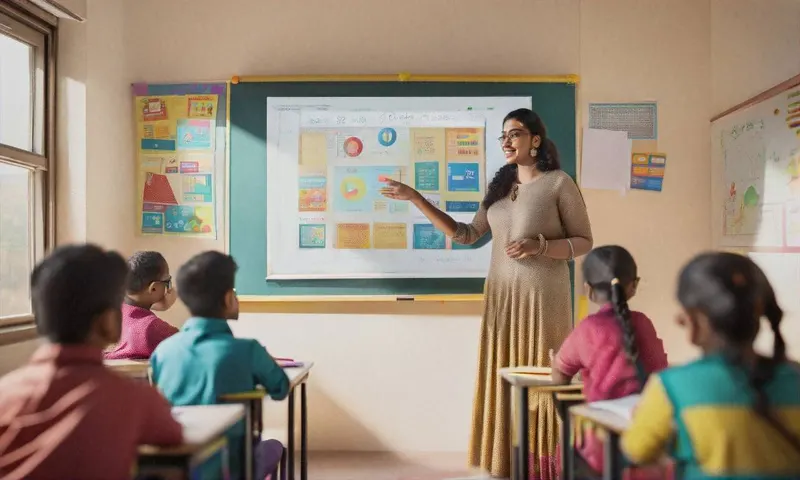
Walk into any government school in Madhya Pradesh today and you'll notice something different about the timetable pinned to the wall. Where there used to be neat rows labelled "Class 1" through "Class 5" for the primary section, some schools now display a different grouping altogether. "Foundational Stage" covers what used to be pre-school and Classes 1 and 2. "Preparatory Stage" takes over for Classes 3 through 5. The labels have changed. But if you watch the students filing in at half past seven in the morning, their bags still heavy with the same textbooks, their uniforms still the same shade of faded khaki, you start to wonder how deep the change actually goes.
The National Education Policy 2020 was approved by the Union Cabinet on 29 July 2020, replacing the thirty-four-year-old National Policy on Education from 1986. It was, by any measure, the most ambitious education reform document India had produced in over three decades. The drafting committee, chaired by Dr. K. Kasturirangan, former chairman of ISRO, spent four years consulting with lakhs of stakeholders across the country before producing a sixty-six-page vision for what Indian education could become. Six years later, it's worth asking an honest question. How much of that ambition has translated into reality? The answer, as with most things in Indian education, doesn't fit into a clean narrative. Some parts of the policy have moved forward faster than anyone expected. Other parts seem stuck in meeting rooms and draft bills. And some parts have run into resistance that the policy's architects may not have fully anticipated when they sat in those conference halls in New Delhi.
The 5+3+3+4 Structure: Reshaping How India Organises Its Schools
The most visible structural change proposed by NEP 2020 was the replacement of the old 10+2 system with a 5+3+3+4 framework. Under this new model, the Foundational Stage covers ages 3 to 8, which means three years of pre-primary education and Classes 1 and 2. The Preparatory Stage covers ages 8 to 11, spanning Classes 3 to 5. The Middle Stage covers ages 11 to 14, which is Classes 6 through 8. And the Secondary Stage covers ages 14 to 18, encompassing Classes 9 through 12. The idea behind this restructuring was to align education stages with what we know about cognitive development in children, rather than continuing with the arbitrary divisions inherited from an older era. A six-year-old and a ten-year-old are at very different points in their development, and the old system lumped them together under "primary school" with broadly similar teaching methods. The new framework acknowledges that a four-year-old in the Foundational Stage needs play-based, activity-driven learning that looks and feels entirely different from what a nine-year-old in the Preparatory Stage should experience.
On paper, this makes considerable sense. Developmental psychology research, including work by Indian researchers at institutions like the National Institute of Mental Health and Neurosciences (NIMHANS) and the Azim Premji Foundation, supports the idea that early childhood education structured around play and exploration produces better learning outcomes than formal, textbook-driven instruction for children under eight. Countries like Finland, whose education system is often held up as a global model, structure their early years education along very similar lines. The question has never been whether the 5+3+3+4 idea is sound. The question has been whether India, with its staggering diversity and scale, can actually implement it.
As of early 2026, approximately twenty-two states and union territories have formally adopted the 5+3+3+4 framework for their state education boards. Karnataka was among the first movers, restructuring its board in 2023. Madhya Pradesh, Gujarat, Uttar Pradesh, and Rajasthan followed through 2024 and into 2025. But adoption on paper and adoption in classrooms are two very different things. Several states that have formally accepted the structure are still running their schools on the old timetable because teacher training for the new pedagogical approaches hasn't caught up. You can rename a stage from "pre-primary" to "Foundational," but if the teacher standing in front of that classroom has not been trained in play-based pedagogy, the children are still going to be sitting in rows, copying letters from a blackboard. And in far too many schools, particularly in rural areas and smaller towns, that is precisely what continues to happen.
The states that have held back form an interesting group. Tamil Nadu has been cautious, raising legitimate concerns about the practical implications for its state board examination system and about the policy's interaction with the existing Samacheer Kalvi curriculum that the state spent years developing. Kerala, which has one of the strongest public school systems anywhere in India, has adopted elements of NEP selectively, implementing the new assessment frameworks and competency-based curriculum ideas while maintaining its own structural organisation. West Bengal and some northeastern states have moved slowly, citing the need for more clarity on funding commitments and teacher availability. These are not states that oppose education reform as a principle. They are states that want to see the detailed plan before they commit resources, which is, one could argue, a reasonable position for any government to take when the lives of millions of children are at stake.
The pre-primary integration deserves special attention because it is both the most radical element of the new structure and the most difficult to implement. NEP envisions three years of pre-school education as a formal part of the school system, accessible to every child in the country regardless of family income or location. Before NEP, pre-school was handled through a loose arrangement of anganwadis under the Integrated Child Development Services scheme and by private nurseries and playschools. The quality across this spectrum ranged from excellent, in well-funded urban private institutions, to barely functional in underfunded anganwadis in remote villages where the anganwadi worker might also be the cook, the cleaner, and the health record keeper. NEP's goal is to bring all of this under one roof, within the school system, with trained teachers and a structured play-based curriculum developed by NCERT.
The NCERT developed the Vidya Pravesh module, a three-month play-based school readiness programme for children entering Class 1, and this has been rolled out in a number of states. Early reports from states that piloted it, including Chhattisgarh and Odisha, suggest it helps with the transition from home to school, particularly for first-generation learners. But extending this approach to a full three years of pre-primary education requires classroom space, trained teachers, age-appropriate learning materials, and funding on a scale that most states have not yet been able to arrange. The Ministry of Education has allocated funds through Samagra Shiksha Abhiyan for pre-primary integration, but educators on the ground report that the money often doesn't reach schools quickly enough or in sufficient quantity.
Mother Tongue Instruction: A Policy Caught Between Research and Aspiration
No part of NEP 2020 has generated more debate, more newspaper columns, more arguments at family dinner tables, than its recommendation on language of instruction. The policy states that "wherever possible, the medium of instruction until at least Grade 5, but preferably till Grade 8 and beyond, will be the home language/mother-tongue/local language/regional language." This single sentence, embedded in a sixty-six-page document that contains hundreds of recommendations, has been interpreted, misinterpreted, celebrated, and protested more than any other line in the entire policy.
The research backing this recommendation is strong and comes from multiple sources. UNESCO has published extensive evidence showing that children learn foundational concepts like literacy and numeracy more effectively when taught in a language they understand at home. In the Indian context, studies by the Azim Premji Foundation, the Annual Status of Education Report (ASER) team, and researchers at Tata Institute of Social Sciences have all pointed to language mismatch as a significant barrier to learning, especially in the early grades. A child who speaks Bhojpuri or Chhattisgarhi at home but is taught in standard Hindi or English at school is spending mental energy on language processing that could otherwise go toward understanding the actual content of the lesson. This is not a controversial claim in education research circles. The evidence is substantial and broadly consistent.
But the pushback has been fierce, and it has come from an unexpected direction: parents themselves, particularly parents in economically disadvantaged communities. In state after state, when government schools have announced mother tongue instruction, parents have protested. In some cases, they have pulled children out of government schools and enrolled them in private English-medium schools, even when those private schools were of questionable quality. The reason behind this reaction is not that these parents have read the educational research and disagree with it. The reason is economic. They see English as the language of upward mobility. A child who speaks fluent English has access to IT jobs, to corporate careers, to a social standing that their parents never had. When the government says "we will teach your child in their mother tongue," many parents hear "we will shut the door to the opportunities that English opens." This perception may not be entirely accurate, and the policy does not propose eliminating English from education, but it is deeply felt, and any policy that ignores it is going to face resistance at the ground level.
What has actually happened on the ground is a patchwork. Karnataka and Andhra Pradesh have experimented with mother tongue instruction in the early grades while introducing English as a subject from Class 1, trying to balance the research with parental expectations. Delhi has expanded English-medium sections in government schools in response to demand, going in the opposite direction of the NEP recommendation. Tribal areas in Odisha, Jharkhand, and Chhattisgarh, where children speak languages that are entirely different from Hindi or the state's official language, have seen some genuine progress through the use of multilingual education programmes that bridge the gap between home language and school language. But these are small-scale pilots, not system-wide transformations.
The three-language formula, which NEP reaffirmed without significantly altering, continues to play out unevenly across the country. In theory, every student should learn three languages, with at least two being native Indian languages. In practice, the South Indian states have long resisted Hindi as a compulsory third language, and NEP wisely chose not to force the issue. The formula remains a recommendation, with states free to decide which languages they offer. This flexibility has prevented a major political crisis but has also meant that the goal of genuine multilingual competence across the student population remains more of an aspiration than a plan with specific timelines and accountability.
Higher Education: Big Ideas, Slow Machinery
The school-level reforms get the most headlines. But NEP 2020's higher education proposals are where the policy's most ambitious, and potentially most disruptive, ideas live. Consider just a few of them. The creation of a single regulatory body for all of higher education, replacing the UGC, AICTE, NCTE, and other regulators. A four-year undergraduate degree with multiple exit points. An Academic Bank of Credits allowing students to accumulate and transfer credits between institutions. Multidisciplinary universities where a physics student could study philosophy and an economics student could take courses in microbiology. The Anusandhan National Research Foundation to transform India's research ecosystem. Each of these proposals, on its own, would constitute a significant reform. Together, they represent a reimagining of what Indian higher education looks like.
The Higher Education Commission of India, or HECI, was supposed to be the centrepiece of the regulatory overhaul. It was to replace the UGC and subsume the regulatory functions of AICTE, bringing all higher education under a single umbrella body. The draft HECI Bill has been circulated, debated, revised, sent back for consultations, and revised again. As of February 2026, it has not been tabled in Parliament. The existing regulatory bodies continue to operate, sometimes in alignment with NEP's direction and sometimes in tension with it. There are reasons for the delay. The UGC has 68 years of institutional history, a large bureaucracy, and entrenched interests. AICTE regulates over 10,000 engineering and management institutions. Merging these bodies into a single commission is an administrative and political challenge of the first order, and the government appears to be proceeding carefully rather than forcing the issue through legislation.
The Academic Bank of Credits has had a smoother journey, at least on the surface. Launched in 2021, the ABC platform allows students to create a digital repository of credits earned from recognised institutions, which can theoretically be used toward a degree even if the credits come from different universities. As of early 2026, over 1,800 higher education institutions are registered on the ABC platform, and more than 7.5 crore students have ABC IDs. These are impressive numbers. But the real question is: how many students have actually transferred credits between institutions and used them toward a degree? The answer, from conversations with university administrators and students, is: very few. The platform exists and functions. The willingness of universities to accept each other's credits with full equivalence, without suspicion or additional hurdles, is still a work in progress. A student at a state university in Rajasthan who earned credits through a SWAYAM course from IIT Bombay might find that the state university's examination office doesn't quite know how to process those credits, or doesn't entirely trust them, or simply hasn't been instructed on the procedure. This gap between platform availability and institutional readiness is one of the recurring themes of NEP implementation.
The four-year undergraduate degree with multiple exit options has been adopted by central universities and a growing number of state universities. Under this framework, a student who leaves after one year receives a certificate, after two years a diploma, after three years a bachelor's degree, and after four years a degree with honours or with research. Delhi University, JNU, BHU, Hyderabad Central University, and several others now offer the four-year programme. The reception from students has been mixed. Many welcome the flexibility. Some are confused about how a four-year degree will be perceived in the job market compared to the traditional three-year degree. Employers, for their part, haven't yet settled on how to treat the different exit points. If a student leaves after two years with a diploma, is that equivalent to a dropout from a three-year programme or is it a recognized qualification in its own right? These are questions that the market will answer over time, but the uncertainty is real for students making decisions today.
The Anusandhan National Research Foundation was established through an Act of Parliament in 2023, with a planned budget of 50,000 crore rupees over five years to be funded by a mix of government allocation and private sector contributions. Its mandate is to fund, coordinate, and promote research across all disciplines, with special attention to state universities and colleges that have traditionally had little research activity. The NRF has begun operations, appointed its governing board, and started disbursing initial grants. But India's gross expenditure on research and development remains around 0.7 percent of GDP, well below the 2 to 3 percent that developed nations spend and that NEP itself envisions as a target. Building a research culture in institutions where teaching loads leave faculty with almost no time for scholarship, where lab equipment is outdated or absent, and where the incentive structure rewards publications over genuine inquiry, is a challenge that money alone cannot solve. It requires a change in institutional culture that will take a generation, not a five-year plan.
Digital Education: Infrastructure Versus Access
NEP 2020 placed significant emphasis on technology as a tool for expanding access and improving quality. The pandemic, which arrived just months before the policy was officially approved, turbocharged this aspect of implementation in ways nobody anticipated. Schools and colleges that had never conducted a single online class were suddenly forced to teach entirely through screens. The experience was uneven and often painful, but it did accelerate the development of digital education infrastructure that might otherwise have taken years to build.
The DIKSHA platform, which stands for Digital Infrastructure for Knowledge Sharing, was launched before NEP but has become closely associated with its digital vision. It now hosts over 7,000 courses and learning modules across multiple languages and has recorded more than 600 crore learning sessions since inception. SWAYAM, the government's MOOC platform, offers thousands of courses from top institutions, with credits that can be transferred to university programmes. The National Digital Education Architecture (NDEAR) has been conceptualised as a framework for connecting various digital education platforms and services.
These are real achievements. But the digital divide has not closed. ASER 2025 data shows that while smartphone ownership among rural households has climbed to about 82 percent, consistent internet connectivity, the kind you need for video lessons and interactive learning, remains unreliable in large parts of eastern India, northeastern India, and hilly terrain across many states. A digital education policy that assumes every student has a working internet connection on a personal device is a policy that systematically disadvantages the students who most need help. The government has acknowledged this through initiatives like PM eVIDYA, which includes dedicated DTH television channels and radio broadcasts for students without internet access. These are useful workarounds. But they cannot offer the interactivity, personalisation, and instant feedback that online learning platforms provide, which means the gap between digitally connected students and others is likely to widen even as overall digital access improves.
There is another dimension to the digital push that gets less attention in policy discussions: teacher capability. The NISHTHA programme, part of the National Mission on ICT in school education, has trained over 45 lakh teachers in digital teaching methods and ICT integration. The training is real and the numbers are real. But attending a two-day or week-long training workshop is a very different thing from using digital tools effectively every day in a classroom. A teacher in a rural school who completed a NISHTHA module on using digital content may return to a school with one shared computer, irregular electricity, and sixty students in a room designed for thirty. In that environment, digital pedagogy is a concept that lives in the training certificate, not in the daily lesson plan. Until the physical infrastructure in schools, the basics like reliable power, functioning computers, and internet that doesn't cut out mid-lesson, catches up with the digital ambition embedded in policy documents, the benefits of educational technology will remain concentrated in urban and semi-urban settings.
State-by-State: A Country of Different Speeds
Education in India is a concurrent subject under the Constitution, meaning both the Union government and state governments share authority over it. This constitutional reality means that any national education policy is, at bottom, a set of recommendations that states can adopt, adapt, or resist. NEP 2020 is no different.
Karnataka has emerged as the most active state in terms of NEP implementation. It restructured its school board to align with the 5+3+3+4 framework, revised its primary and middle school curriculum, and has been among the early adopters of the four-year undergraduate degree and the Academic Bank of Credits in its state universities. The state's education department has also invested in teacher training programmes specifically designed around NEP's pedagogical approach. Gujarat has moved at a similar pace, integrating NEP into its primary curriculum and launching pilot programmes for multidisciplinary education in state universities.
Uttar Pradesh presents a different picture. With the largest student population of any state, over 1.6 lakh primary schools, and a teacher workforce that numbers in the millions, the scale of implementation is daunting. The state has formally adopted NEP and revised its primary curriculum. In some districts, particularly those near Lucknow, Varanasi, and Prayagraj where administrative attention is greater, the new curriculum is being followed with reasonable care. In more remote districts, teachers report that they haven't received the new textbooks, or received them late, or received them without any accompanying training on how to use them. Rajasthan and Madhya Pradesh show broadly similar patterns: formal adoption at the state level, inconsistent execution at the district and school level.
The southern states form an interesting cluster. Andhra Pradesh and Telangana have adopted many NEP reforms, particularly in higher education, and have moved forward with curriculum revision. Tamil Nadu has been the most cautious, implementing changes it agrees with while publicly questioning others, particularly around the language policy and the proposed regulatory overhaul that could affect its autonomous university system. The state's position is that it supports the goals of NEP but wants the flexibility to implement them in ways that work for Tamil Nadu's specific context and educational tradition. Kerala, as mentioned, has taken a measured approach, integrating assessment reforms and competency-based ideas into its already strong public school framework without wholesale restructuring.
The northeastern states face a distinct set of challenges. Geographic isolation, extraordinary linguistic diversity (Arunachal Pradesh alone has over thirty distinct languages), limited infrastructure, and smaller administrative capacity all make policy implementation harder. Assam has made progress in adopting the new school structure, but Meghalaya, Nagaland, Mizoram, and Manipur are in earlier stages. The central government has tied certain Samagra Shiksha Abhiyan funding allocations to NEP compliance, which has encouraged some states to move faster than they might otherwise have done. But tying education reform to funding conditions creates its own tensions, particularly in states that feel their unique circumstances are not adequately reflected in a policy designed primarily with the Hindi-belt mainstream in mind.
The Honest Reckoning: What Works, What Doesn't, What We Don't Know Yet
The competency-based approach to assessment is one area where change is clearly visible. CBSE's exam patterns have shifted over the last three years, with more case-based questions, more application-oriented problems, and fewer questions that reward pure memorization. Several state boards have followed suit. This aligns directly with NEP's emphasis on testing understanding rather than recall, and teachers and students are gradually adapting to the new format. Whether it's producing better learning outcomes will take longer to measure, but the direction is consistent with what education research recommends.
Vocational education integration into mainstream schooling, starting from Class 6, is another area of visible progress. Under Samagra Shiksha, over 14,000 schools now offer vocational courses alongside regular academics. Students can learn coding, basic financial literacy, traditional crafts, or agricultural skills depending on the school's offerings. The quality varies enormously from school to school. But the idea itself, that learning a practical skill does not make you less of a student, that vocational and academic education should coexist without stigma, is beginning to take root in the system. This is a cultural shift as much as a policy one, and cultural shifts are slow. But in conversations with teachers and school administrators across multiple states over the last year, I've encountered more openness to vocational integration than I expected.
Teacher education remains the most significant bottleneck. NEP envisioned a complete overhaul, with a four-year integrated B.Ed. becoming the minimum qualification for teachers by 2030. The four-year programme has been introduced in some universities, but the overwhelming majority of teachers entering the system are still products of the traditional two-year B.Ed. or D.El.Ed. programmes. The standalone teacher education colleges, many of which are widely acknowledged to be of poor quality, continue to operate. Closing down substandard teacher training institutions and replacing them with something better is a reform that involves powerful local interests, established business models, and a workforce that depends on the current system for employment. It is happening, but slowly, and not at the pace the policy envisioned.
Funding casts a long shadow over everything. NEP 2020 recommended increasing public expenditure on education to 6 percent of GDP. India currently spends about 4.4 percent, a figure that has been roughly stable for years. That 1.6 percentage point gap represents lakhs of crores of rupees annually, money that would fund the universal pre-school programme, the teacher training overhaul, the laboratory upgrades in colleges, the research grants, and the digital infrastructure that NEP promises. Without a marked increase in education spending at both the central and state levels, many of these promises will remain partially fulfilled, visible in flagship schools and universities that receive special attention, invisible in the vast majority of institutions that serve the vast majority of students.
And then there are the things we simply don't know yet. It's hard to say yet whether the four-year undergraduate degree will produce better-prepared graduates or just extend the time students spend in a system that may not have changed in substance. It's hard to say whether the Academic Bank of Credits will become a genuinely used tool for educational mobility or an impressive technical platform that most students never actually engage with in a meaningful way. It's hard to say whether the Anusandhan National Research Foundation will succeed in bringing research culture to institutions where it has never existed, or whether it will end up funding the institutions that were already doing research, widening the gap rather than narrowing it.
NEP 2020 was written as a fifteen-to-twenty-year roadmap. We are not even halfway through. Declaring it a success or a failure at this point would be intellectually dishonest. What we can say is that it has moved the conversation. It has changed timetables and curricula in thousands of schools. It has introduced ideas into Indian education, like multidisciplinary learning and credit transferability, that simply weren't part of the mainstream discussion before. Whether these ideas will survive contact with the reality of Indian governance, Indian funding levels, and Indian politics long enough to produce the transformation the policy envisions is a question that nobody, no matter how confidently they speak on television panels, can answer yet.
Walk back into that school in Madhya Pradesh a decade from now. Will the children coming through the Foundational Stage read better than their parents did? Will they think more critically? Will they have options their parents never had? The new timetable on the wall is a promise. Whether it becomes something more than that depends on decisions being made right now, in state capitals and district offices and individual classrooms, by thousands of people who may never read the policy document that set all of this in motion.
Source: This article draws on official Ministry of Education reports, ASER 2025 data, NCERT publications, state education department communications, and field reporting conducted between November 2025 and February 2026. The full text of the National Education Policy 2020 is available at education.gov.in.
Comments 0
Leave a Comment