Pradhan Mantri Bhartiya Janaushadhi Pariyojana 2026: Affordable Generic Medicines at Up to 90% Discount
Did you know that you could be paying ten times more for a medicine than you need to? Read that again. Ten times.
I am not exaggerating. I am not trying to scare you. I have the receipts -- literally. Last month, my father needed atorvastatin for his cholesterol. The branded version his doctor prescribed came to Rs 142 for a strip of ten tablets. I walked to the Jan Aushadhi Kendra three streets away and bought the exact same drug -- same molecule, same dosage, same strength -- for Rs 14. Not Rs 140. Not Rs 40. Fourteen rupees. That is a 90 percent discount for the same medicine.
My father is a retired government employee with a decent pension. That Rs 128 difference per strip is annoying but not life-threatening for our family. But think about the crore-plus diabetes patients in this country who need metformin every single day. Think about the heart patients on blood thinners. Think about the cancer patients whose monthly medicine bills run into lakhs. For those families, the difference between branded and generic is the difference between affording treatment and quietly stopping medicines because the money ran out.
That is why I care about Jan Aushadhi. That is why you should care about it too.
Let Me Explain What Jan Aushadhi Actually Is
The Pradhan Mantri Bhartiya Janaushadhi Pariyojana -- PMBJP for short, because the government loves its acronyms -- is a programme run by the Department of Pharmaceuticals under the Ministry of Chemicals and Fertilizers. It is implemented by an agency called BPPI, the Bureau of Pharma PSUs of India. What BPPI does is simple: it buys generic medicines in bulk from WHO-GMP certified manufacturers and distributes them through a network of special retail outlets called Jan Aushadhi Kendras.
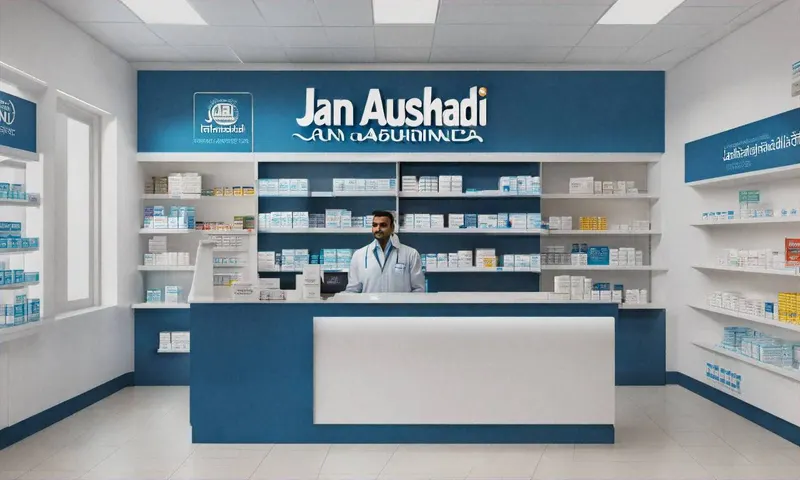
These Kendras look like regular pharmacies from the outside. Red and blue signboard, the Jan Aushadhi logo, and a pharmacist behind the counter. But inside, the pricing is from a different planet. Everything is 50 to 90 percent cheaper than what you would pay at Apollo Pharmacy or your neighbourhood medical store for the branded equivalent.
Why? Because generic medicines do not carry the inflated marketing costs that branded drugs do. When you buy a branded tablet, you are paying for the TV ads, the doctor's conference in Goa, the free samples, the medical representative's salary, and the company's profit margin. The active ingredient -- the part that actually treats your disease -- costs a fraction of that. Generic medicines strip away the branding and sell you the medicine. Just the medicine.
The "Quality" Myth: Let Me Bust This Right Now
I know what many of you are thinking. "Itni sasti dawai, kaam karegi kya?" Will such cheap medicine actually work?
This is the single biggest barrier to generic medicine adoption in India. And it is based on a misconception that the branded pharma industry has spent decades building. Let me set the record straight.
Generic medicines contain the exact same active pharmaceutical ingredient, in the exact same dosage, as the branded version. Paracetamol 500mg from Jan Aushadhi is the same paracetamol 500mg as Crocin. Metformin 500mg from Jan Aushadhi is the same metformin 500mg as Glycomet. The molecule does not change based on the brand name printed on the strip.
But what about quality control? Fair question. Here is how BPPI handles it. Every single medicine in the Jan Aushadhi catalogue is sourced from manufacturers who hold WHO Good Manufacturing Practices certification. This is the same standard that international regulatory agencies demand. It is the same standard that Indian pharma companies follow when they export medicines to Europe, America, and Africa. Our pharma industry supplies generic medicines to half the world. The quality standards exist. They are enforced.
On top of that, every batch -- every single batch -- of medicine that enters the Jan Aushadhi supply chain is tested at a NABL-accredited laboratory before distribution. They check for assay, dissolution, disintegration, content uniformity, and stability. If a batch fails on any parameter, it is rejected. Period. It does not reach the shelves.
I once visited the BPPI warehouse in Gurugram with a delegation of consumer rights activists. We saw the quality testing reports, the batch tracking system, the rejection logs. The process is real. It is not just paperwork.
Here is my challenge to anyone who still doubts generic quality: go to a Jan Aushadhi Kendra, buy a strip of paracetamol, and use it the next time you have a headache. See if it works. Then ask yourself why you have been paying Rs 25 for Crocin when the Jan Aushadhi version costs Rs 2.50 and does the exact same thing.
Price Comparison: Drug by Drug, Rupee by Rupee
Let me give you a detailed breakdown. These are real prices that I have personally verified by visiting both a Jan Aushadhi Kendra and a regular pharmacy in Delhi in February 2026. I am using common medicines that millions of Indians take every day.
Paracetamol 500mg (10 tablets)
Branded (Crocin/Dolo): Rs 22 to Rs 30
Jan Aushadhi: Rs 2.50 to Rs 3
You save: About 88-90%
Metformin 500mg (10 tablets) -- for Type 2 Diabetes
Branded (Glycomet/Obimet): Rs 35 to Rs 70
Jan Aushadhi: Rs 8 to Rs 10
You save: About 77-86%
For a patient taking this daily, that is roughly Rs 600-1,800 saved per year on this one medicine alone.
Atorvastatin 10mg (10 tablets) -- for Cholesterol
Branded (Atorva/Lipitor): Rs 110 to Rs 145
Jan Aushadhi: Rs 12 to Rs 15
You save: About 89-90%
Annual saving for a daily user: Rs 3,400-4,700
Amlodipine 5mg (10 tablets) -- for High Blood Pressure
Branded (Amlong/Amlip): Rs 30 to Rs 55
Jan Aushadhi: Rs 4 to Rs 6
You save: About 87-89%
Pantoprazole 40mg (10 tablets) -- for Acid Reflux/Gastric Issues
Branded (Pan-40/Pantocid): Rs 85 to Rs 130
Jan Aushadhi: Rs 12 to Rs 16
You save: About 86-88%
Clopidogrel 75mg (10 tablets) -- Blood Thinner for Heart Patients
Branded (Clopitab/Plavix): Rs 85 to Rs 160
Jan Aushadhi: Rs 10 to Rs 16
You save: About 88-90%
Losartan 50mg (10 tablets) -- for Blood Pressure
Branded (Losar/Repace): Rs 70 to Rs 110
Jan Aushadhi: Rs 8 to Rs 12
You save: About 88-89%
Glimepiride 2mg (10 tablets) -- for Diabetes
Branded (Amaryl/Glimisave): Rs 65 to Rs 100
Jan Aushadhi: Rs 10 to Rs 14
You save: About 85-86%
Ciprofloxacin 500mg (10 tablets) -- Antibiotic
Branded (Ciplox): Rs 70 to Rs 105
Jan Aushadhi: Rs 15 to Rs 20
You save: About 78-81%
Cetirizine 10mg (10 tablets) -- for Allergies
Branded (Cetzine/Alerid): Rs 25 to Rs 45
Jan Aushadhi: Rs 3 to Rs 5
You save: About 88-89%
Now let me put this into a real-life scenario. Take a 55-year-old patient -- let us call him Sharma uncle, because every colony has one -- who has diabetes, high blood pressure, and high cholesterol. Not unusual at all for his age group. His daily medicines at branded prices:
Metformin 500mg (twice daily) + Amlodipine 5mg (once daily) + Atorvastatin 10mg (once daily) + Pantoprazole 40mg (once daily, for the acidity the other medicines cause).
At branded rates, his monthly bill comes to roughly Rs 800 to Rs 1,200. At Jan Aushadhi prices, the same combination costs Rs 100 to Rs 150 per month. Annual saving: Rs 8,400 to Rs 12,600. That is enough to pay for a child's school fees for a term. Or a family's groceries for two months.
And this is for a patient with relatively common conditions on relatively inexpensive medicines. For cancer patients on monthly chemo drugs that cost lakhs in branded versions, the Jan Aushadhi alternatives save even more. Anti-cancer medicines are now available at these Kendras, and for many families, this is genuinely the difference between treatment and surrender.
How to Find the Nearest Jan Aushadhi Kendra: A Step-by-Step Guide
Finding a Jan Aushadhi Kendra near you is easier than you think. Here are all the ways you can locate one:
Method 1: The Jan Aushadhi Sugam App
Download the "Jan Aushadhi Sugam" app from the Google Play Store or the Apple App Store. It is free. Open it, and it will use your phone's GPS to show you the nearest Kendras on a map. Each listing shows the store address, phone number, and operating hours. You can also search for specific medicines and check their price and availability. This is honestly the fastest way.
Method 2: The Official Website
Go to janaushadhi.gov.in. There is a "Store Locator" section. You can search by state, district, and city. The website gives you a complete list of all registered Kendras in your area with their details.
Method 3: The Toll-Free Helpline
Call 1800-180-8080. It is a toll-free number. The operator can tell you the nearest Kendra to your location and answer questions about medicine availability and pricing.
Method 4: Just Ask Around
This sounds basic, but it works. If you live in a town of any reasonable size, there is almost certainly a Jan Aushadhi Kendra within a few kilometres. Ask at the government hospital, ask your local chemist, ask the nearest ASHA worker. With over 12,500 Kendras across the country and at least one in every district, they are not that hard to find.
A practical tip: if you go to a Jan Aushadhi Kendra and the specific medicine you need is out of stock, ask the pharmacist when the next supply is expected. Stock replenishment usually happens every two to three weeks. You can also check availability on the app before making the trip. And if there is a medicine you take regularly, you can request the store to keep it in stock for you -- most Kendra operators are quite accommodating about regular orders.
What Is Actually Available? The Product Range
When Jan Aushadhi started, the product list was limited. Maybe a couple hundred medicines. People would go, not find what they needed, get frustrated, and never go back. I remember this being a major complaint five or six years ago.
That has changed significantly. As of February 2026, the Jan Aushadhi catalogue has over 1,800 medicines and more than 300 surgical and consumable items. The range covers pretty much every major therapeutic area:
- Heart and blood pressure medicines: anti-hypertensives (amlodipine, losartan, telmisartan, enalapril), statins (atorvastatin, rosuvastatin), blood thinners (clopidogrel, aspirin, warfarin), and cardiac drugs.
- Diabetes medicines: metformin, glimepiride, glipizide, voglibose, sitagliptin, and insulin preparations. Yes, even insulin.
- Antibiotics: amoxicillin, azithromycin, ciprofloxacin, cefixime, doxycycline, levofloxacin, and many more.
- Pain and fever medicines: paracetamol, ibuprofen, diclofenac, aceclofenac, and combination painkillers.
- Gastric medicines: pantoprazole, omeprazole, ranitidine, domperidone, and antacid preparations.
- Anti-allergy medicines: cetirizine, levocetirizine, montelukast, and antihistamines.
- Respiratory medicines: salbutamol, theophylline, and inhalers for asthma patients.
- Mental health medicines: antidepressants, anti-anxiety drugs, and antipsychotics. This is important because mental health medicines are often expensive and patients need them long-term.
- Anti-cancer drugs: this is a relatively recent addition, but there are now several anti-cancer medicines available at Jan Aushadhi Kendras at a fraction of the market price.
- Nutraceuticals: protein powders, multivitamins, iron-folic acid supplements, and calcium tablets. The Jan Aushadhi protein powder, in particular, has become quite popular -- it costs about Rs 200 for a tin that would be Rs 600-800 in a branded version.
- Surgical items: gloves, syringes, bandages, surgical sutures, catheters, and other consumables.
- Sanitary napkins: the "Suvidha" brand sanitary napkin is available at Jan Aushadhi Kendras for just Re 1 per pad. One rupee. When branded sanitary pads cost Rs 6-8 each, this is a direct intervention for menstrual hygiene affordability.
The product range gets reviewed and expanded regularly. BPPI adds new medicines based on demand patterns and the National List of Essential Medicines. If you find that a particular medicine you need is not in the Jan Aushadhi catalogue, you can submit a request through the app or the website, and it may be added in a future update.
The Scale of This Programme: Numbers That Matter
Let me give you some numbers that put this programme in perspective.
Over 12,500 Jan Aushadhi Kendras are now running across all 36 states and union territories. Every single district in India has at least one. States like Uttar Pradesh, Maharashtra, Madhya Pradesh, Karnataka, and Gujarat have the densest coverage, with some districts having ten or more Kendras.
Since the programme began, total sales have crossed Rs 14,000 crore. The estimated savings for consumers -- meaning the difference between what people paid at Jan Aushadhi prices and what they would have paid for branded equivalents -- is over Rs 28,000 crore. Twenty-eight thousand crore rupees that stayed in the pockets of ordinary Indian families instead of going into the profit margins of pharmaceutical companies.
Monthly sales in 2025-26 have been consistently exceeding Rs 150 crore. That number keeps growing as more people discover these stores.
And yet -- and this is what bothers me -- most people I talk to still do not know about Jan Aushadhi. I conducted an informal survey among fifty people in my neighbourhood in Noida. Middle-class families, educated, many with chronic conditions. Only twelve of them had heard of Jan Aushadhi. Only three had actually bought medicines from a Kendra. The awareness gap is huge, and the government has not done nearly enough to publicise this programme. You see Amitabh Bachchan on TV advertising everything from paan masala to digital payments. Would it kill the government to run a proper awareness campaign telling people they can get their medicines for 90 percent less?
Who Can Open a Jan Aushadhi Kendra? The Business Case
Here is something interesting: opening a Jan Aushadhi Kendra is not just social service. It is a viable business. The government has designed the model so that store operators can earn a decent income while selling affordable medicines.
Here is how the economics work. The store operator buys medicines from BPPI's distribution network and sells them at the MRP printed on the packaging. The trade margin is 20 percent of the MRP. So if you sell a medicine priced at Rs 100, you keep Rs 20. Given the high volume of sales -- because the prices are so low that customers buy in larger quantities and come back more often -- well-located Kendras can generate good revenue.
Who can apply? Pretty much anyone.
- Any Indian citizen above 21 years of age with a valid pharmacy licence, or who is willing to employ a registered pharmacist (B.Pharm or D.Pharm).
- Registered societies, trusts, NGOs, and self-help groups.
- Private hospitals, clinics, and government bodies.
- Existing retail chemists who want to add a Jan Aushadhi section or convert their store.
The space requirement is modest: a minimum of 120 square feet in a location with reasonable foot traffic. A hospital campus, a market area, near a bus stand or railway station -- these are all good spots.
The government sweetens the deal with a one-time setup grant of up to Rs 5 lakh. This money goes towards furniture, fixtures, IT infrastructure (computer, printer, billing software), and initial setup costs. For applicants belonging to SC/ST categories, women entrepreneurs, divyangjans (persons with disabilities), and those opening stores in aspirational districts or the Northeast, the grant amount is higher and the terms are more favourable.
The application process is online through the PMBJP portal at janaushadhi.gov.in. You fill out the form, submit the required documents (pharmacy licence, ID proof, address proof, bank details), and wait for approval. The processing involves verification by the State Drug Controller and BPPI. Once approved, BPPI helps with the initial medicine stock supply and provides training on store operations, billing, and inventory management.
I have spoken to several Kendra operators. One woman in Lucknow, Rekha Srivastava, told me she started her Kendra in 2023 with the government grant and an additional investment of about Rs 2 lakh from her own savings. Within six months, she was earning a net income of about Rs 25,000 per month. "Paisa bhi milta hai, aur logon ki seva bhi hoti hai," she said. You earn money and serve people at the same time. She has since expanded and now employs two pharmacists and a helper.
The Doctor Problem: Why Doctors Still Prescribe Branded Medicines
I have to address the elephant in the room. If generic medicines are the same quality at a fraction of the price, why do most doctors still prescribe branded versions?
The Medical Council of India issued guidelines years ago asking doctors to prescribe medicines by their generic name. The government has reiterated this repeatedly. But walk into any doctor's clinic in India and look at the prescription. Nine times out of ten, it will have brand names, not generic names. Why?
There are several reasons, and not all of them are nefarious. Some doctors genuinely believe -- based on their clinical experience or lack of updated information -- that certain brands work better. Some have legitimate concerns about quality consistency across different generic manufacturers. Fair enough. But let us also acknowledge the reality that the branded pharmaceutical industry spends an obscene amount of money on marketing to doctors. Free samples, sponsored conferences, gifts, and yes, sometimes direct financial incentives. This is not a secret. The Indian pharma industry spends roughly 20 to 30 percent of its revenue on marketing. That money goes somewhere, and a large chunk of it goes towards influencing prescribing behaviour.
What can you, as a patient, do? Ask your doctor. "Doctor saab, iska generic milega kya?" If they prescribe Glycomet, ask if you can take plain metformin from Jan Aushadhi instead. Most honest doctors will say yes. If a doctor refuses to prescribe generics without a clear medical reason, consider getting a second opinion. Your money, your right.
Also, remember that a pharmacist at any pharmacy -- not just Jan Aushadhi -- can substitute a branded medicine with its generic equivalent if the prescription is written in the generic name. This is legal. This is encouraged by the government. Do not let anyone tell you otherwise.
Common Concerns and Honest Answers
"I bought Jan Aushadhi medicine once and it did not work as well."
This is a common complaint, and I want to address it honestly. There can be perceptible differences in how a medicine "feels" even when the active ingredient is the same, because of differences in excipients -- the inactive ingredients like binders, fillers, and coatings. These do not affect the therapeutic efficacy (the medicine's ability to treat your condition), but they can affect things like how quickly the tablet dissolves or whether it causes mild stomach irritation. If you had a bad experience with one specific medicine, try a different lot or give it a couple of weeks. If the issue persists, talk to your doctor. But do not write off the entire programme based on one experience.
"The Jan Aushadhi Kendra near me never has what I need."
Stock-outs are a real issue at some Kendras, especially in smaller towns. The supply chain has improved a lot compared to even two years ago, but it is not perfect. My advice: check the app for availability before you visit. If your medicine is out of stock, ask the pharmacist when the next supply is expected. For medicines you take regularly, give the Kendra operator a heads-up about your monthly requirement so they can order accordingly.
"My doctor said generics from these stores are low quality."
With respect to your doctor, this is not supported by evidence. Every Jan Aushadhi medicine passes through the same quality testing as any other pharmaceutical product on the Indian market. The manufacturers are WHO-GMP certified. If your doctor has specific concerns about a specific batch, that is a legitimate conversation. But a blanket dismissal of all generic medicines is not science -- it is prejudice, possibly influenced by the branded pharma sales representative who visited the clinic last week.
"Are Jan Aushadhi medicines just for poor people?"
Absolutely not. Smart spending is not about income level. Why would you pay Rs 140 for atorvastatin when Rs 14 gets you the same drug? That is not poverty -- that is common sense. I know families with household incomes above Rs 2 lakh per month who buy their regular medicines from Jan Aushadhi. The money saved goes to better food, their children's education, or their emergency fund. Being savvy with your health expenditure benefits you regardless of how much you earn.
What Needs to Improve
I support this programme strongly, but I am not going to pretend it is perfect. Here are the issues that need fixing:
Awareness. I said it before and I will say it again. The government's biggest failure with PMBJP is communication. Crores of people who would benefit from Jan Aushadhi have never heard of it. A sustained media campaign -- TV, radio, social media, wall paintings in villages -- would make a massive difference. Every government hospital should have a Jan Aushadhi Kendra inside or next to it. Some do, but many do not.
Stock reliability. Nothing kills trust faster than going to a store and finding that your medicine is out of stock. BPPI needs to tighten the supply chain, improve demand forecasting, and reduce the turnaround time between orders and delivery. Kendras in high-demand areas should have larger buffer stocks.
Expanding the catalogue. Over 1,800 medicines is good. But the branded market has thousands more. There are still common medicines that patients need but cannot find at Jan Aushadhi. The catalogue needs to keep growing, especially for newer drugs and combination medicines that have become standard of care.
Kendra operator support. Some Kendras struggle financially because of location issues, low footfall, or supply problems. BPPI should provide more active support to struggling operators, including marketing assistance, better supply terms, and possibly a minimum guaranteed income for the first two years.
Prescription by generic name. The government needs to enforce the MCI directive on generic prescribing. Not just issue guidelines -- actually enforce them with consequences for non-compliance. Until doctors write prescriptions in generic names as a matter of routine, the full potential of programmes like Jan Aushadhi will not be realised.
One Last Thing
I want to leave you with a story. Last year, I received a WhatsApp message from a reader in Varanasi. His mother had been diagnosed with a particular type of blood cancer. The branded version of her monthly chemotherapy medicine cost Rs 18,000 per cycle. The family's total monthly income was about Rs 30,000. They were about to give up treatment. Someone told them about Jan Aushadhi. The same medicine at the Kendra cost Rs 2,800 per cycle. His mother completed her treatment. She is in remission now.
That is not a government statistic. That is one family that did not have to choose between food and medicine.
Jan Aushadhi is not perfect. The stores are not everywhere. The stock is not always reliable. The awareness is still pathetically low. But what this programme does -- when it works, where it works -- is save lives by making medicines affordable. In a country where 55 million people are pushed into poverty every year because of health expenses, that is not a small thing.
Go find your nearest Kendra. Give it a try. Share this article with your parents, your neighbours, your WhatsApp groups. The more people know about Jan Aushadhi, the more lives it can save.
Dawai pe paisa bachao. Sehat pe mat bachao.
Source: This article is based on information from the official Pradhan Mantri Bhartiya Janaushadhi Pariyojana portal (janaushadhi.gov.in), Bureau of Pharma PSUs of India (BPPI) reports, the Department of Pharmaceuticals, Ministry of Chemicals and Fertilizers, and the author's personal visits to Jan Aushadhi Kendras and interviews with store operators and consumers.
Comments 0
Leave a Comment