Ayushman Bharat PMJAY: Health Insurance for Families - Eligibility, Card, Hospitals and Treatment Process
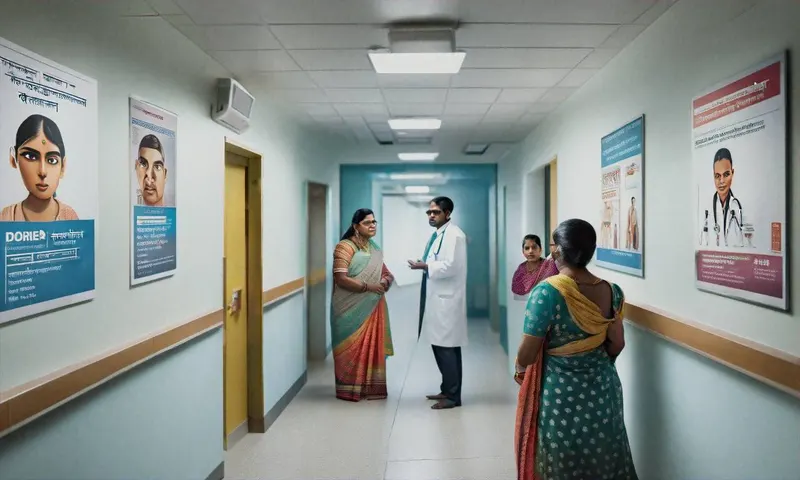
If you've been told you qualify for Ayushman Bharat but have no idea what that actually means in practice, you're not alone. I've worked in public health for over fifteen years, spent time in district hospitals and primary health centres across Rajasthan and Gujarat, and I still meet people every week who have an Ayushman card in their wallet but don't really understand when they can use it, where they can use it, or what will actually happen when they walk into a hospital and say "I have Ayushman." So let me try to explain this properly, the way I'd explain it to a family member.
What Ayushman Bharat PMJAY Actually Is
Ayushman Bharat Pradhan Mantri Jan Arogya Yojana -- PMJAY -- is a government health insurance scheme that gives your family up to Rs 5 lakh per year for hospitalization expenses. The government pays for it entirely. You don't pay any premium. You don't pay any co-payment at the hospital. If you are eligible and you need to be hospitalized for a condition that's covered under the scheme, the treatment is supposed to be completely free.
That "supposed to be" is doing a lot of work in that sentence, and I'll get to the complications, but first let me explain the basics clearly because there is a lot of misinformation floating around. Some people think Ayushman Bharat covers all medical expenses. It doesn't. It covers hospitalization. That means you need to be admitted to a hospital. OPD visits -- the kind where you see a doctor and go home the same day -- are generally not covered, though some day-care procedures that don't require overnight admission are included in the package list. Some people think the Rs 5 lakh is per person. It's not. It's per family per year, and the family is defined as per the SECC (Socio-Economic Caste Census) database entry, which means everyone listed in that particular household record shares the Rs 5 lakh ceiling.
Some people think you can go to any hospital. You can't. Only empanelled hospitals -- hospitals that have signed up with the scheme and been approved -- will accept Ayushman treatment. And some people believe that once you have the card, everything is automatic. I wish that were true.
Are You Eligible?
This is where confusion begins for most people. Eligibility for PMJAY is not based on a simple income threshold. You can't just apply if you're poor. The scheme uses two databases to identify beneficiaries.
For rural families, the basis is the Socio-Economic Caste Census 2011 (SECC 2011). The survey identified families based on deprivation parameters -- things like having only one room with kucha walls, no adult member between 16 and 59, a female-headed household with no male earning member, families with a disabled member, landless families deriving income from manual labour, SC/ST households, and families with no literate adult above 25 years. If your family was identified as "deprived" under any of these seven categories in the SECC 2011 survey, you are eligible.
For urban families, the SECC 2011 identified eligible occupational categories. These include rag pickers, beggars, domestic workers, street vendors, construction workers, plumbers, painters, welders, security guards, coolies, rickshaw pullers, shop workers, transport workers, electricians, mechanics, assembly workers, washermen, chowkidars, and sweepers -- among others.
In 2024, the scheme was expanded to cover all citizens aged 70 years and above, regardless of income. This was a significant expansion, adding an estimated 6 crore senior citizens to the eligible pool. If you are 70 or older, you qualify even if your family wasn't in the SECC database.
Now here's the thing that frustrates people the most. You cannot decide on your own whether you're eligible. The list was made based on a survey conducted in 2011. If your family's situation has deteriorated since then -- if you've lost income, if the earning member passed away, if you've fallen into poverty -- but your household wasn't flagged in the 2011 survey, you are technically not in the system. I know how unfair that sounds. It is unfair. But that's how the eligibility is currently structured.
How to Check If Your Name Is in the System
The fastest way to check is to call 14555. That's the Ayushman Bharat helpline. Give them your name, Aadhaar number, and family details. They can tell you within minutes whether your household is in the PMJAY database.
You can also check online at pmjay.gov.in. Click on "Am I Eligible" and enter your mobile number. You'll get an OTP, and after verifying, you can search by name, ration card number, mobile number, or RSBY URN (if you were part of the earlier Rashtriya Swasthya Bima Yojana scheme).
Another option is to visit a Common Service Centre or an Ayushman Mitra at an empanelled hospital. Many government hospitals have an Ayushman help desk right near the entrance. Walk in with your Aadhaar card and they can check your eligibility on the spot.
If your name is in the database, you can get your Ayushman card made right there. If it's not, well -- you can try checking with different family member names or different search parameters. Sometimes the SECC data has spelling variations or the family head's name is different from what you expect. If it's genuinely not there, I'm sorry, but there's no application process to add yourself. You either are in the SECC database or you aren't, unless you fall into the 70-plus age category.
Some states have their own expanded versions of Ayushman Bharat that cover more families. Rajasthan's Chiranjeevi scheme, Chhattisgarh's Khubchand Baghel scheme, Maharashtra's Mahatma Jyotiba Phule Jan Arogya Yojana -- these state schemes often have broader eligibility criteria and are integrated with PMJAY. If you're not in the central PMJAY database, check whether your state has a scheme that might cover you.
Getting Your Ayushman Card
Once you've confirmed your eligibility, you need an Ayushman card. This is a physical or digital card with a unique Health ID linked to your Aadhaar. You need it to avail treatment.
The process is simple. Go to any Common Service Centre or Ayushman Mitra desk. Carry your Aadhaar card and a photocopy. The operator will verify your identity through Aadhaar-based biometric authentication (fingerprint or iris scan), confirm your eligibility, and generate your Ayushman card. The card has your photo, your name, your PMJAY ID number, and a QR code. It's usually printed and laminated right there. Some centres charge Rs 30-50 for the printing -- officially the card generation is free, but the printing and lamination cost is often passed on.
You can also create a digital Ayushman card through the Ayushman app or the National Health Authority website. The digital version is stored on your phone and works the same way -- the hospital can scan the QR code to verify your identity and eligibility.
Every eligible family member can get their own card. If there are five people in your household as per the SECC data, all five can have individual Ayushman cards. They all share the Rs 5 lakh annual limit, but each person can use it independently.
What Does the Scheme Cover?
PMJAY covers over 1,900 treatment packages across 27 specialties. That sounds like a lot, and it is. The coverage includes treatment for cancers, heart diseases, kidney diseases, burns, neonatal conditions, orthopaedic conditions requiring surgery, neurological conditions, and many more. It covers surgery, medical treatment, day-care procedures, and follow-up care for 15 days after discharge.
Let me list some of the major categories so you have a sense of the scope:
- Cardiology and cardiothoracic surgery -- including bypass surgery, angioplasty, valve replacement
- Orthopaedics -- including knee replacement, hip replacement, spinal surgery
- Oncology -- cancer treatment including chemotherapy, radiation, and certain surgical procedures
- Neurosurgery -- brain tumour surgery, spinal cord procedures
- Urology -- kidney stone removal, prostate surgery
- General surgery -- appendectomy, hernia repair, gall bladder removal
- Obstetrics and gynaecology -- caesarean delivery, hysterectomy
- Eye care -- cataract surgery
- ENT procedures
- Burns treatment
- Neonatal and paediatric conditions
Pre-existing conditions are covered from day one. There is no waiting period. This is different from most private insurance policies that make you wait 2-4 years before covering pre-existing conditions. With Ayushman Bharat, if you have diabetes and need hospitalisation for a diabetic complication, you're covered immediately.
What's NOT covered: outpatient consultation (going to the doctor and coming home), fertility treatment, cosmetic procedures, organ transplant (though some related procedures may be covered), and drug rehabilitation. The full list of covered packages is available on the PMJAY website and the package rates are fixed -- meaning the hospital can't charge more than the government-set rate for any covered procedure.
Finding an Empanelled Hospital
Not all hospitals accept Ayushman. Only those that have applied for empanelment, met the infrastructure and staffing criteria, and been approved by the State Health Agency are part of the network. Both government hospitals and private hospitals can be empanelled.
To find empanelled hospitals near you, go to pmjay.gov.in and use the "Find Hospital" tool. You can search by state, district, hospital type (government or private), and specialty. The website shows the hospital name, address, contact number, and which treatment packages they offer.
You can also call 14555 and ask for a list of empanelled hospitals in your area.
Here's a practical tip. Government hospitals that are empanelled tend to have more experience processing Ayushman patients and fewer issues with the paperwork. Private empanelled hospitals sometimes have longer verification times or are more selective about which procedures they'll do under Ayushman, because the government-set package rates are often lower than what they charge private patients. This isn't always the case -- there are many private hospitals doing excellent work under the scheme -- but it's something to be aware of.
What Actually Happens at the Hospital
This is the part nobody writes about clearly enough, so let me walk you through a realistic scenario.
Let's say your mother needs knee replacement surgery. She has an Ayushman card. Here's what happens, step by step.
You take her to an empanelled hospital. At the entrance or reception, you look for the Ayushman Mitra desk or the PMJAY help desk. Every empanelled hospital is required to have one. You go there and tell them your mother needs treatment and has an Ayushman card.
The Ayushman Mitra checks her card and verifies her identity through Aadhaar biometric authentication -- fingerprint or iris scan. They pull up her profile on the Transaction Management System (TMS), which is the software platform that manages all Ayushman claims. They confirm she's eligible and check whether she has sufficient balance in her Rs 5 lakh annual limit.
The hospital then admits her and the treating doctor examines her. Based on the diagnosis, the hospital creates a "pre-authorization request" on the TMS portal. This request includes the diagnosis, the proposed treatment package, estimated costs, and supporting medical documents. The request goes to the district-level Insurance Company or State Health Agency for approval.
This is where the waiting happens. Pre-authorization can take anywhere from a few hours to 2-3 days. For emergency cases, there's supposed to be a fast-track approval process, and many emergencies get immediate approval. For planned surgeries, the wait is usually 24-48 hours. During this waiting period, your mother is already admitted and receiving initial care. The hospital is not supposed to delay emergency treatment while waiting for authorization.
Once pre-authorization is approved, the surgery happens. After the procedure, the hospital submits the final claim with discharge summary, operation notes, and other documentation. The claim is processed and the hospital is paid directly by the Insurance Company or State Health Agency. You don't pay anything. No cash. No hidden charges.
That's how it's supposed to work. Now let me tell you about the complications.
Sometimes the hospital says the treatment your mother needs isn't covered under the Ayushman package rate at the cost she actually requires. Knee replacement, for example, has a fixed package rate. If the hospital usually charges Rs 2.5 lakh for the surgery and the Ayushman package rate is Rs 80,000, some private hospitals will simply say they can't do it under Ayushman. They're not turning you away from the scheme -- they're saying the economics don't work for them at the government rate. This is a real and ongoing problem, especially for expensive procedures at high-end private hospitals.
Sometimes the pre-authorization gets rejected. Maybe the diagnosis doesn't match the requested package code. Maybe the supporting documents are insufficient. Maybe the insurance company's reviewer disagrees with the treatment plan. The hospital can appeal, but that takes more time.
Sometimes there are hidden costs. The treatment itself is free, but the hospital tells you that certain medicines aren't available in the hospital pharmacy and you'll need to buy them outside. Or that certain implants (in orthopaedic cases, for example) need to be of a specific brand that costs extra. Or that the room the patient needs isn't available under the Ayushman package and they'll need to pay extra for a better room. All of these are technically violations of the scheme rules -- the hospital is not supposed to charge the patient anything beyond what the package covers -- but in practice, they happen. If this happens to you, note the details, note the amounts, and complain to the Ayushman helpline at 14555. There is a grievance mechanism, and hospitals that repeatedly overcharge patients can have their empanelment revoked.
Emergency Situations
If it's an emergency -- an accident, a heart attack, a stroke -- you don't need pre-authorization. Go to the nearest empanelled hospital. If the nearest hospital isn't empanelled, go there anyway. Treatment first, paperwork later. The scheme allows for emergency admissions where the pre-authorization can be sought retrospectively within 48-72 hours.
In practice, if the hospital isn't empanelled, the Ayushman card won't work there and you will end up paying out of pocket. This is a genuine problem in rural areas where the nearest empanelled hospital might be 40-50 kilometres away and the local hospital isn't part of the network. Know your nearest empanelled hospital before an emergency happens. Write the name and address down. Keep it with the Ayushman card. When you're in a crisis, you won't have time to search the website.
The Rs 5 Lakh Limit -- How It Works in Practice
Rs 5 lakh per year per family sounds substantial. And for most common procedures, it is enough. A cataract surgery costs about Rs 15,000-25,000 under the package rates. A caesarean delivery is about Rs 15,000-18,000. An appendectomy is Rs 20,000-25,000. For these kinds of treatments, the Rs 5 lakh limit is more than sufficient, and most families won't come close to exhausting it.
But for serious illnesses -- cancer treatment that requires multiple rounds of chemotherapy and radiation, cardiac bypass surgery, organ-related complications requiring extended ICU stays -- the costs can climb quickly. A cancer patient might need Rs 3-4 lakh worth of treatment over several months. If another family member needs hospitalization in the same year, the remaining balance might not be enough.
The annual limit resets every year. So if you used Rs 3 lakh this year, you have a fresh Rs 5 lakh next year. But within a single year, once the Rs 5 lakh is exhausted, the family has to bear any additional costs themselves. There is no provision for exceeding the limit, regardless of the circumstances.
Common Questions People Ask Me
Can I use my Ayushman card in another state? Yes. PMJAY is portable across India. If you are a beneficiary in Uttar Pradesh and you're visiting Kerala when you fall ill, you can use your Ayushman card at any empanelled hospital in Kerala. This is one of the genuinely good features of the scheme. Migrant workers, in particular, benefit from this portability.
My family member passed away. Can other family members still use the card? Yes. Each family member has their own Ayushman card. If one member passes away, the remaining members' cards continue to work. The Rs 5 lakh annual family limit is shared among the surviving members.
I was in RSBY before. Do I need a new card? Yes. The old Rashtriya Swasthya Bima Yojana smart cards have been replaced. You need a new Ayushman card. However, if you were an RSBY beneficiary, you are automatically eligible for PMJAY. Get your new card made at any CSC or Ayushman desk.
Can I choose which hospital to go to? Yes, from among the empanelled hospitals. You're not assigned to a specific hospital. You can go to any empanelled hospital, government or private, anywhere in India.
What if the hospital asks me for money? They shouldn't. Under PMJAY, the entire cost of covered treatment is borne by the scheme. If a hospital demands money from you, it's a violation. Note down the details -- what they asked for, how much, who asked -- and call 14555 to file a complaint. You can also complain through the PMJAY grievance portal online.
Does Ayushman cover my regular diabetes or blood pressure medicines? No. Ayushman covers hospitalization, not regular OPD medicines. For outpatient medicine needs, look into the Jan Aushadhi scheme which provides generic medicines at discounted rates through Jan Aushadhi Kendras.
Is there a separate card for each family member? Yes. Each eligible member gets their own card with their own photo and ID. But the Rs 5 lakh limit is shared across the entire family as listed in the SECC household.
The Senior Citizen Expansion
The 2024 expansion that added all citizens above 70 to the scheme deserves special mention because it works slightly differently. For the senior citizen segment, the Rs 5 lakh cover is a separate, additional cover. That means if a 72-year-old person's family is already in the SECC database and has the Rs 5 lakh family cover, the senior citizen gets an additional Rs 5 lakh for themselves under the age-based provision. In effect, the family's coverage increases to Rs 10 lakh.
For senior citizens whose families are NOT in the SECC database, the Rs 5 lakh cover is individual and specifically for the senior citizen. Other family members below 70 won't be covered unless they qualify through the regular SECC route.
To get the senior citizen Ayushman card, the process is the same -- visit a CSC or Ayushman desk with Aadhaar and age proof. The system will verify your age from the Aadhaar database and generate the card if you're 70 or above.
Things People Don't Talk About Enough
I want to mention a few realities that government press releases don't highlight.
Package rates haven't been updated significantly in several years for many procedures, while the cost of medical supplies, medicines, and staffing has gone up. This creates pressure on hospitals, particularly private ones, to either cut corners or avoid doing certain procedures under Ayushman altogether. The National Health Authority has revised rates for some packages, but the rate revision that many hospitals are asking for has been slow.
Fraud exists. There have been documented cases of hospitals billing for procedures that were never performed, inflating diagnoses to claim higher package rates, or performing unnecessary procedures to generate claims. The NHA has an anti-fraud framework and has de-empanelled hospitals found guilty of fraud, but the problem persists. If you receive an SMS saying a treatment was provided to you under Ayushman but you never went to that hospital -- report it immediately on 14555. Someone may be misusing your Ayushman ID.
The quality of care under Ayushman varies enormously. At a well-run government medical college hospital or a reputable private hospital that's genuinely committed to the scheme, the care is good. But at smaller private hospitals that empanelled primarily to increase their patient volume, the quality can be questionable. There is no easy way for a patient to know which empanelled hospital provides good care and which doesn't. The PMJAY website doesn't have ratings or reviews. Word of mouth within your community is often the best guide.
Mental health coverage is limited. While some mental health conditions requiring hospitalization are technically covered, the practical availability of mental health treatment under Ayushman is very poor. Most empanelled hospitals don't have psychiatric wards or trained mental health professionals. This is a reflection of the broader gap in mental health infrastructure across the country, but it means Ayushman isn't very helpful if your family member needs psychiatric care.
Helpline and Contact Information
Ayushman Bharat Helpline: 14555 (toll-free, available 24x7)
Website: pmjay.gov.in
Ayushman App: Available on Google Play Store -- published by National Health Authority
Grievance Portal: grievance.pmjay.gov.in
The 14555 helpline is actually quite good. The operators are trained, they can check your eligibility, help you find hospitals, and register complaints. If you're confused about anything related to PMJAY, calling this number is genuinely the best first step.
State-Specific Schemes That Work Alongside PMJAY
Several states have their own health schemes that are either integrated with or run parallel to PMJAY. If you live in one of these states, you may have additional coverage beyond the basic PMJAY Rs 5 lakh.
Rajasthan's Chiranjeevi scheme provides Rs 25 lakh coverage for every family in the state, with PMJAY integrated into it. Chhattisgarh's Dr. Khubchand Baghel Health Assistance scheme covers all state residents with Rs 5 lakh per family per year, using the PMJAY platform. Tamil Nadu's Chief Minister's Comprehensive Health Insurance Scheme provides its own coverage for state residents. Andhra Pradesh's Dr. YSR Aarogyasri scheme offers Rs 5 lakh coverage integrated with PMJAY. Maharashtra's Mahatma Jyotiba Phule Jan Arogya Yojana provides additional coverage for state residents.
Check what your state offers. You might have more coverage than you realize, or the state scheme might cover conditions that PMJAY doesn't.
Ayushman Bharat is, by numbers alone, the largest government health insurance scheme in the world. Over 30 crore Ayushman cards have been issued. Crores of treatments have been authorized. It has genuinely helped millions of families avoid medical bankruptcy -- I've seen it firsthand, families who would have sold their land or taken devastating loans to pay for a heart surgery or cancer treatment, getting it done under Ayushman without spending a rupee. But the gaps remain real. The SECC 2011 database is fifteen years old now and it doesn't reflect who actually needs help today. The exclusion of outpatient care means the scheme only helps when you're already seriously ill, not with the regular healthcare that prevents serious illness. Package rates being out of date means hospitals are squeezed, and patients sometimes pay the price through lower quality care or being turned away from certain procedures. The digital infrastructure works well in cities but breaks down in remote areas. And the sheer scale of the programme means that fraud detection is always playing catch-up with those who would exploit it -- which still leaves families like the ones I meet every week, cardholders who need the system to work exactly when it matters most, hoping that the promise printed on that little card will actually hold up when they walk through the hospital door.
Source: This article is based on information from the National Health Authority (nha.gov.in), PMJAY official portal (pmjay.gov.in), Press Information Bureau releases, and the author's experience working in public health systems across multiple states.
Comments 0
Leave a Comment